
When Liberty Kitchen received a Princess Royal Training Awards in 2025, the recognition went beyond a training initiative. It provided a powerful example of how opening access to skills can support rehabilitation and create wider benefits for individuals, communities and the economy.
Liberty Kitchen’s work aligns with the mission of the City & Guilds Foundation, which champions skills as the critical lever to creating a more level playing field for those facing the greatest inequalities. By removing these barriers to skills and supporting individuals to lead more productive lives, the Foundation is reducing structural inequalities and creating a more productive society. And Liberty Kitchen are an excellent example of how this is working in practice.
From an idea to a skills programme inside prison
Liberty Kitchen was founded by filmmaker Janet Boston whose early career documenting environmental and social issues around the world exposed her to the power of street food as a route into entrepreneurship and work.
Janet spent years volunteering as an independent monitor at HM Prison Holloway, where she saw first-hand how important focused activity could be for people in custody. Combining these insights, she developed the idea of a social enterprise where people in prison could gain culinary and workplace skills by creating and selling their own street food.
Although the original concept was designed for women at Holloway, the prison closed before the project could fully launch. Undeterred, and encouraged by the support and impetus from an incredible board of Trustees including former Lord Chancellor, Lord Charlie Falconer, Janet approached HM Prison Pentonville, where senior leaders recognised its potential.
With access to a kitchen and support from the prison’s reducing reoffending team, Liberty Kitchen launched a training programme where participants would develop recipes, cook food and contribute to a street food enterprise selling to the public.
Learning through real enterprise
What sets Liberty Kitchen apart is its emphasis on real work and ownership. Participants are not simply learning cooking techniques; they are contributing to a functioning food business.
Each week they work with professional chefs, enterprise specialists and mentors to develop practical skills including food preparation and commercial kitchen operations; menu and recipe development; and customer service and sales.
Participants are encouraged to create their own dishes, many inspired by their cultural backgrounds and experiences. These recipes have shaped Liberty Kitchen’s menu, with street food ranges reflecting the diversity of London’s communities and presented as signature ‘streetballs’.
This approach gives participants both the technical capability and the confidence that comes from seeing their ideas turned into real products that sell to customers around London.
Creating a workplace environment
A key element of the programme is its focus on simulating the expectations of a workplace. In many prisons, daily activity is fragmented and limited. Liberty Kitchen instead provides structured shifts and collaborative working, helping participants build habits that are essential for employment.
Alongside practical cooking sessions, the programme brings in external trainers and guest speakers including Liberty Kitchen Trustee, Jon Watts a bestselling author Chef with lived experience. Participants work with professional chefs, catering experts, business mentors and social enterprise leaders, expanding their networks and understanding of opportunities beyond prison.
The result is an environment where individuals develop not only skills but also confidence, teamwork and creativity.
Skills that continue beyond the prison gates
Since launching at Pentonville, Liberty Kitchen has worked with over 150 participants inside the prison; and around a third through the gate. Many continue their journey with the organisation after release, gaining further experience on the Liberty Kitchen street food stall or through catering events across London.
The street food enterprise acts as both a shop window and stepping stone. Some former participants move into full-time roles in catering and hospitality, while others use the entrepreneurial skills they gained to start their own businesses.
The programme does not assume that everyone will pursue a career in food. Instead, it equips participants with transferable skills that can support a wide range of career paths.
Strengthening connections
Liberty Kitchen also delivers cooking with family days inside the prison. Here participants cook the recipes they have created alongside their families who come into prison for an experience that attempts to replicate the ‘feel of a family kitchen’. These days reinforce the pride participants feel in their work especially as they sit together to eat different recipes and appreciate others food and flavours.
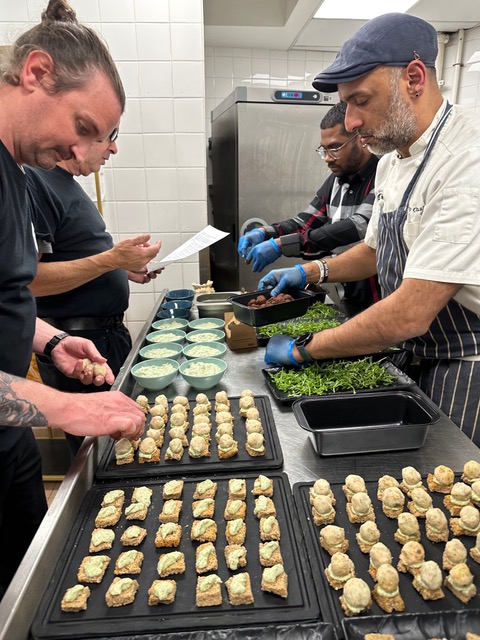
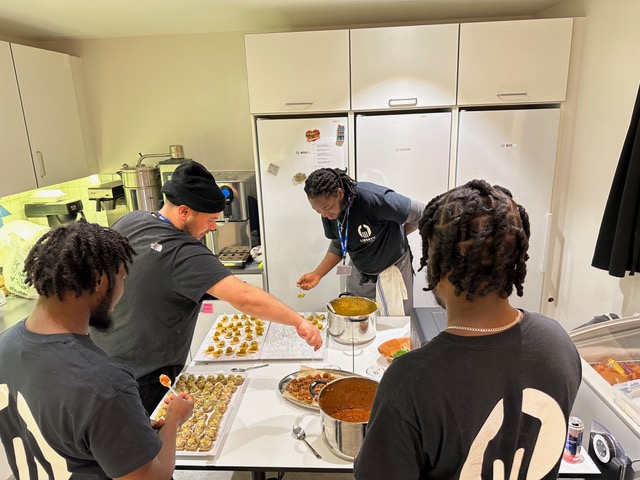
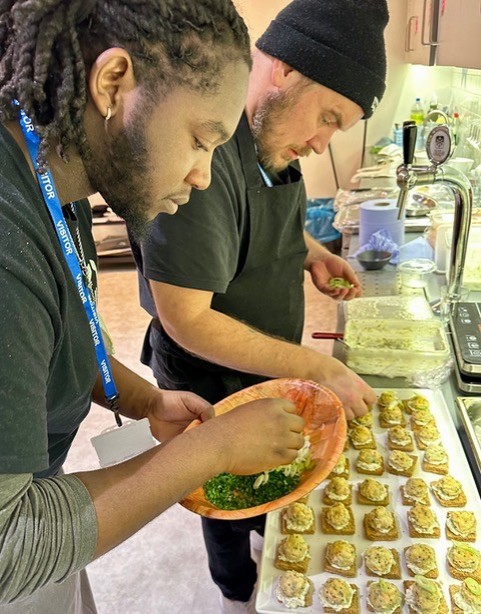
Externally, Liberty Kitchen caters events such as the Longford Trust annual lecture for up to 500 guests. Former participants work alongside each other, preparing and delivering delicious tastes of London canape recipes including meat, fish, veggie, vegan and sweet and all designed and created by the men inside. Other occasions for which Liberty Kitchen is proud to have catered include weddings and celebrations both outside and inside the prison where participants are often mistaken as an outside catering company. Crucially, Liberty Kitchen has a weekly market at Leather Lane (Hatton Gardens) where its offer includes Mac n Cheese or ‘Acaraje’ - a Brazilian inspired recipe which are offered alongside other popular choices.
Skills as a route to productivity and opportunity
Liberty Kitchen’s impact reflects that skills, productivity and inequality are intrinsically linked.
Low levels of skill can trap individuals in cycles of unemployment and low income. Those barriers, in turn, limit opportunities to develop further skills, reducing productivity and increasing inequality.
By contrast, programmes like those run by Liberty Kitchen show how removing barriers to skills development can unlock potential and create positive outcomes for individuals and society. Participants gain confidence, purpose and employability. Communities benefit from reduced reoffending and stronger local economies.
By recognising, supporting and celebrating initiatives that widen access to skills, the City & Guilds Foundation aims to break the cycle of disadvantage and help build a more productive and inclusive economy.
Hi, Is this programme only for those in prison?
Hello, this programme takes place at HMS Pentonville and they cater for events and have a regular stall at several markets in London including Leather Lane. You can find out more on their website https://www.libertykitchen.org/